


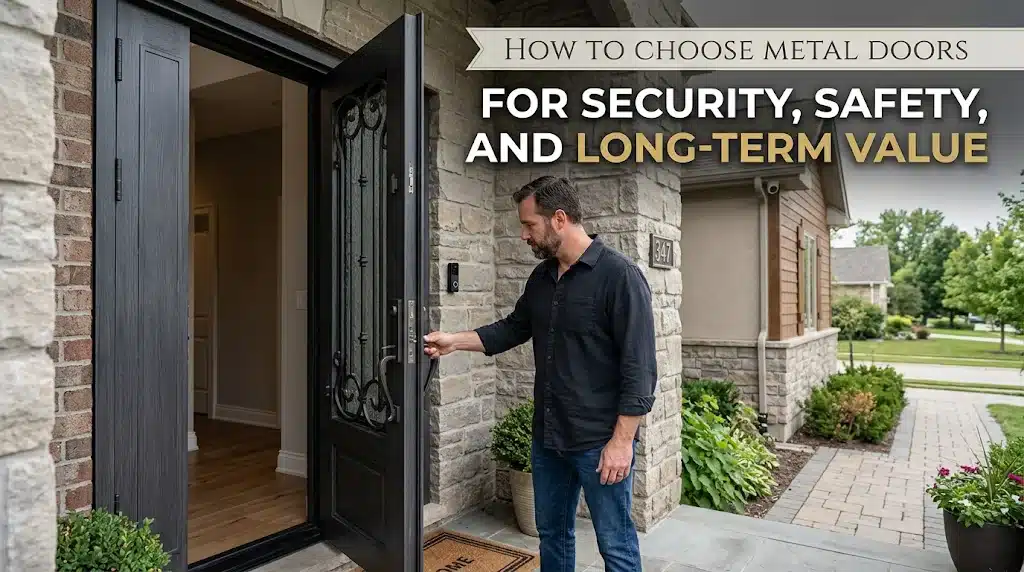
A door is more than a moving panel in a wall. In commercial, institutional, industrial, and multifamily settings, it can affect security, emergency egress, accessibility, noise, energy use, and the daily experience of everyone who enters the building.
When comparing metal doors, begin with the opening’s intended use rather than choosing solely by appearance or initial cost. A busy service entrance, a classroom corridor, and a weather-exposed retail entry can each require a different combination of materials, cores, frames, hardware, and protective features.
Why Metal Doors Remain a Practical Choice
Metal doors are widely used where frequent operation, impacts, and demanding conditions make durability important. Steel doors and frames can be configured for a range of functions, including standard interior passage, exterior access, security-sensitive areas, and rated assemblies. Their surfaces can also be prepared for coatings that fit the surrounding building design.
Long-term value is usually tied to the complete lifecycle of the opening. A well-matched door can reduce recurring damage, operate more consistently, and make replacement parts easier to specify. However, a durable slab cannot compensate for a poorly fitted frame, inadequate hinges, or hardware selected without considering door weight and traffic.
Common Types of Metal Doors
Proper door installation is important for every category because an opening must be square, aligned, anchored, and fitted with compatible hardware to perform as intended. Common metal-door options include the following:
- Hollow metal doors: Common in schools, offices, healthcare facilities, warehouses, and other high-use environments.
- Security doors: Used where resistance to forced entry, impact, or unauthorized access is a priority.
- Fire-rated doors: Part of tested and labeled assemblies intended to limit the spread of fire and smoke for a specified period.
- Exterior doors: Selected with weather exposure, drainage, corrosion resistance, insulation, and sealing in mind.
- Specialty doors: May be designed for acoustic control, severe weather, ballistic resistance, lead lining, or other project-specific needs.
Security Features to Review
Security is determined by the whole opening, not simply the thickness of the door face. Review the door construction, internal reinforcement for hardware, hinge type, latch and lock preparation, frame strength, anchoring method, glazing, and the condition of the wall around the frame. A strong door paired with a loose frame or improperly installed strike can still be vulnerable.
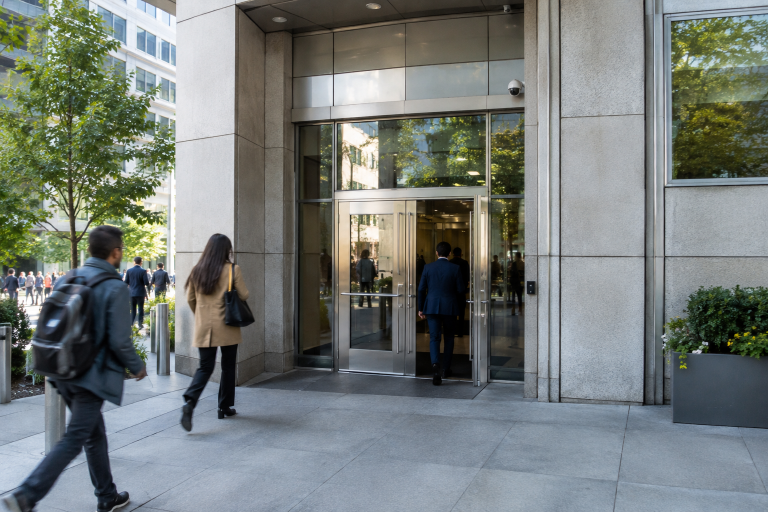
For controlled entrances, access-control devices, closers, electrified locks, panic hardware, and vision panels should be selected together. Exit hardware must support safe egress while the locking arrangement addresses the building’s security needs. Any planned modification should be checked for its effect on applicable fire, accessibility, and life-safety requirements.
Fire Safety and Code Requirements
A metal door is not automatically a fire door. A fire-rated opening is a tested assembly that may include the door, frame, hinges, closer, latch, seals, glazing, and mounting details. As an overview of how fire door assemblies function, the components work together to slow the movement of fire and smoke between building compartments.
For a code-sensitive project, verify the required rating, label, hardware, clearances, and installation details with the authority having jurisdiction and qualified professionals. Fire doors should close and latch as designed. They should not be wedged open, drilled, cut, or fitted with replacement hardware unless the change is permitted for that specific assembly.
Energy and Sound Performance
For exterior openings, the core alone does not determine energy performance. Weatherstripping, thresholds, sweeps, gasketing, frame alignment, and the fit between the door and frame all influence air movement and water resistance. Insulated door constructions can help reduce heat transfer, but sealing and installation details remain essential.
Sound control also depends on the complete opening. A heavier or insulated construction may help reduce sound transmission, yet gaps at the perimeter, unsealed penetrations, and improperly adjusted hardware can limit real-world results. Projects with specific acoustic goals should use assemblies tested for the desired level of performance.
Matching the Door to the Building
Questions to Ask by Occupancy
- Schools: Consider repeated traffic, safe exit hardware, visibility, impact resistance, and maintainable finishes.
- Offices: Consider access control, appearance, sound privacy, and reliable latching.
- Warehouses: Focus on equipment traffic, impact exposure, clear opening size, and durable hardware.
- Healthcare facilities: Review cleanability, privacy, fire protection, and frequent operation.
- Retail buildings: Balance security, accessibility, customer flow, weather exposure, and visibility.
- Multifamily properties: Evaluate shared-entry security, noise transfer, weather conditions, and local requirements.
Why Frames and Hardware Matter
Frames transfer loads to the surrounding wall and keep the door positioned for proper swing, latching, and sealing. If a frame shifts, corrodes, or loses anchoring, the door may rub, sag, fail to latch, or place excess stress on hinges and closers. Repeatedly adjusting a lock will not solve a structural alignment problem.
Hardware should match the door’s size, weight, frequency of use, and required function. Accessibility is another essential consideration. The ADA door and gate requirements address issues such as clear width, maneuvering clearance, threshold height, and operable hardware for doors on accessible routes.
Maintenance Steps That Prevent Problems
- Inspect hinges, fasteners, anchors, and visible frame damage at least annually.
- Confirm that the door closes, latches, and opens without scraping or requiring excessive force.
- Check for rust, dents, peeling coatings, damaged seals, and loose glazing components.
- Clean finished surfaces with mild soap, clean water, and a soft cloth.
- Test exit devices and closers in accordance with the building’s safety procedures.
- Address minor alignment issues promptly before they damage locks, strikes, hinges, or frames.
A Simple Buying Checklist
- What type of building and opening will use the door?
- How much daily traffic, impact, weather, moisture, or chemical exposure will it face?
- Are fire, security, acoustic, accessibility, or insulation requirements involved?
- Does the frame suit the wall construction and selected door assembly?
- Which hinges, locks, closers, exit devices, seals, and access-control components are needed?
- Who will install, inspect, repair, and maintain the opening over time?
Final Thoughts
The best metal door is not necessarily the heaviest or most expensive option. It is the one that fits the building’s risks, daily use, safety obligations, and maintenance capacity. Reviewing the door, frame, hardware, ratings, and installation conditions as a single coordinated opening helps ensure dependable performance and greater long-term value.
